
By Emma May 28, 2026, 5:00 PM By Emma | Aesthetic Outfits Ideas
7 Aesthetic Outfit Ideas That Finally Made Me Feel Like Myself
My closet was full and I still had nothing to wear.
Two rails of clothes. A dresser that wouldn’t close. A pile on the chair in the corner that had its own gravitational pull. And every single morning I stood in front of all of it in my apartment outside Austin and felt like I owned someone else’s wardrobe. Even my cat Pumpkin, who judges everything, would watch me change three times before coffee and then walk away.
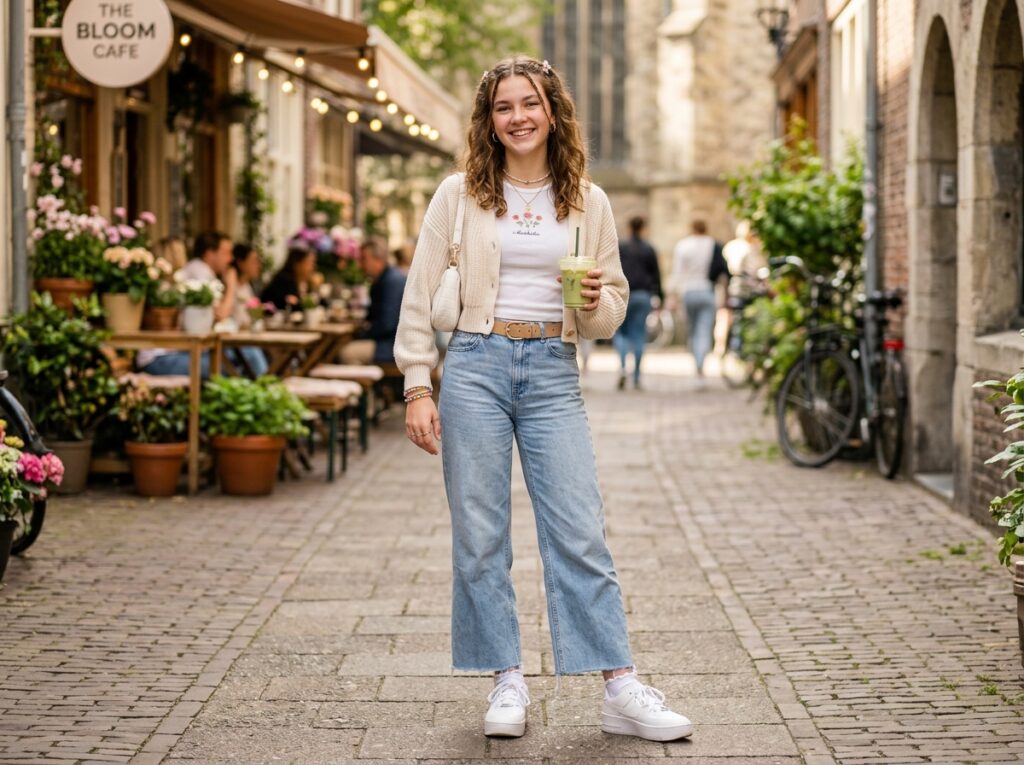
I tried everything I’d saved. Nothing worked.
By last year, I started understanding why.
Most “aesthetic outfit” advice online is written by people who get dressed for a photo, not for a life. It’s styled for a flat-lay on a white floor, not for a Tuesday when you have errands, a coffee with a friend, and zero patience left by 8 a.m. The outfits look effortless because someone spent two hours and forty pieces building one look you’ll never actually leave the house in.
Everything in this post is something I tested on my own body, in my own mirror, on real days. A few changes cost under $20. None of them require throwing out your closet. And every single one made an immediate, visible difference to how put-together I felt in clothes I mostly already owned.
A warm, sunlit Austin bedroom with an open wardrobe showing a curated capsule of caramel, cream and soft black pieces, a full-length mirror leaning against the wall, and folded knit textures stacked neatly
1. Color Palette: The First Thing I Got Wrong, and the Fix That Actually Worked
Buying random pieces I “liked” was my first big mistake and the most expensive one.
I’d see a mustard cardigan, a cobalt blue dress, a bright coral top, all on different days, all on sale, and grab them one at a time. Individually, every piece was cute. Together they were chaos. Nothing matched anything. I owned forty tops and could build maybe four outfits.
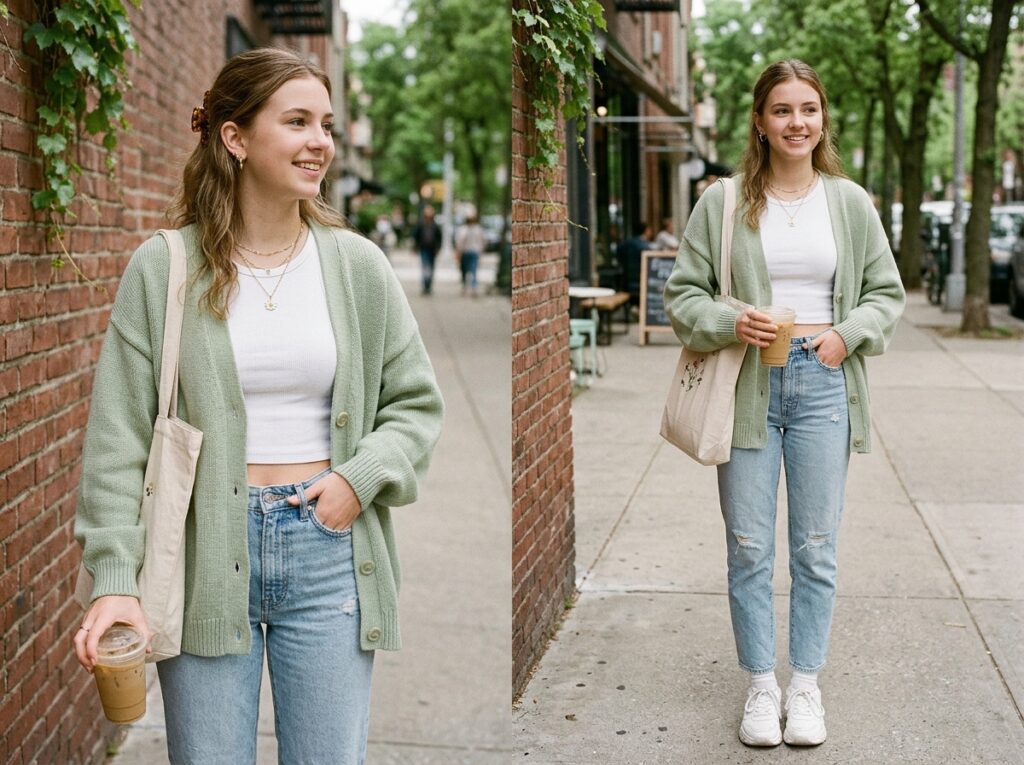
I rebuilt my whole approach within a season.
The fix was choosing a palette and refusing to buy outside it. Mine landed on warm neutrals: cream, caramel, soft brown, and one grounding dark for contrast. Suddenly things I bought separately worked together without trying.
What I’d do differently: Before buying anything, lay your favorite five outfits on the bed and look at the colors that repeat. That’s your real palette not the one on a mood board, the one you actually reach for. Pick three or four tones, plus one dark anchor. Warm undertones and cool undertones fight each other the same way two paint colors clash on a wall. Cool grays and stark whites read very different next to warm camel and ivory. Once you commit, every new piece has to earn its place by working with what you already own.
That one habit has saved me hundreds in clothes I would’ve worn twice and resented.
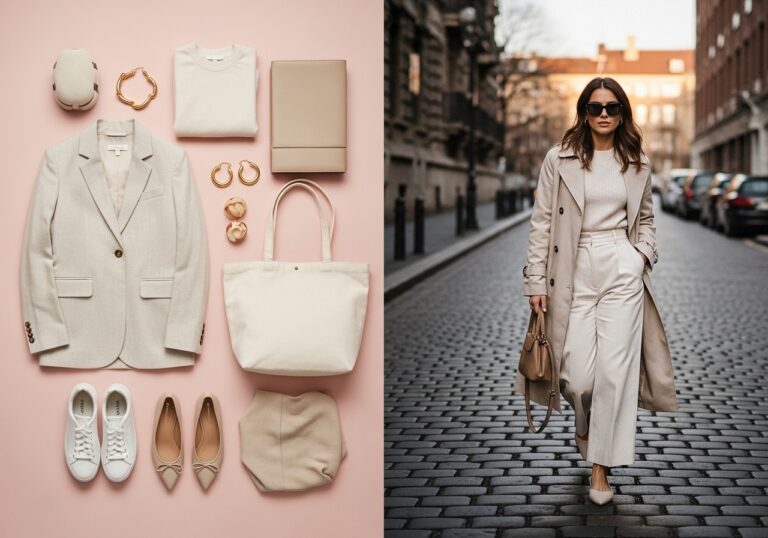
A flat-lay of a cohesive outfit palette in cream, caramel and soft black showing how warm neutral pieces mix and match effortlessly across tops, knits and trousers
2. Fit: The Single Biggest Change in My Entire Wardrobe
I wore clothes that didn’t fit for years. Too boxy, too long in the sleeve, gaping at the shoulder. One flat, shapeless silhouette that made even nice fabric look cheap.
When I finally started tailoring, my outfits transformed overnight.
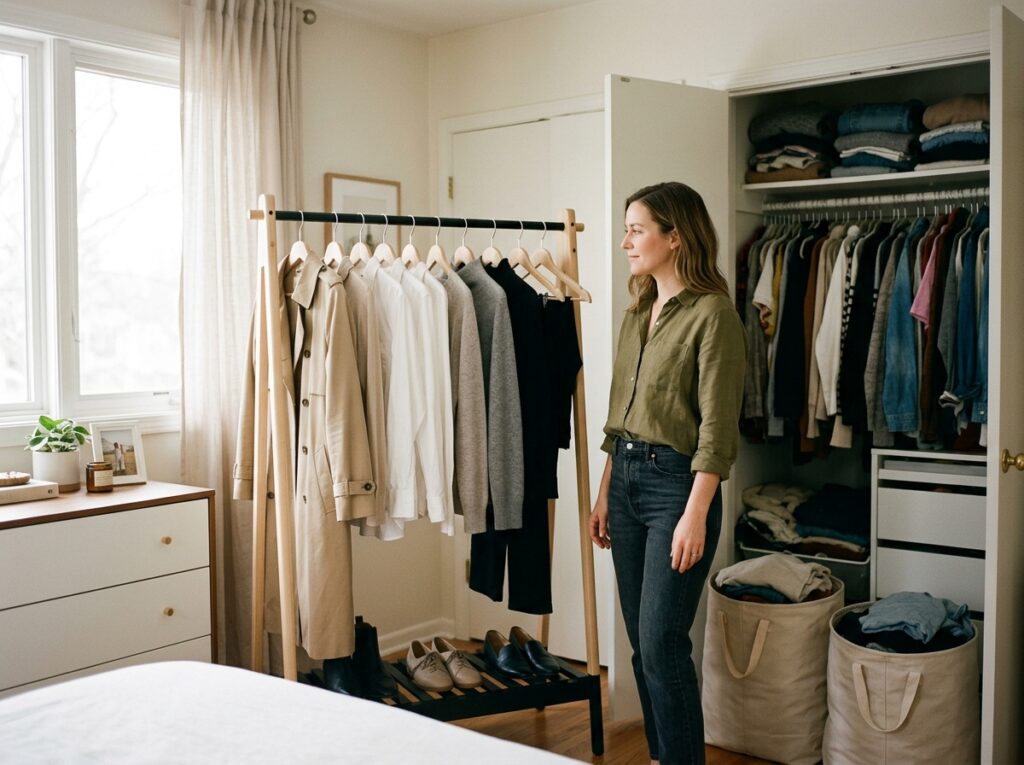
Here’s exactly what I did:
- Took three pairs of trousers to a local tailor $12 each to hem
- Had two oversized blazers taken in at the shoulder $20 each
- Started buying for my actual size, not my goal size or my “this’ll do” size
- Learned where a hem should hit my ankle and a sleeve should hit my wrist
That’s it. Same clothes, mostly. Just made to fit me.
The difference was immediate and a little embarrassing I’d spent months buying new pieces when the real problem was that nothing sat right on my frame. A $30 thrifted blazer that fits beats a $200 one that doesn’t, every time. People kept asking if my clothes were new. They weren’t. They just finally fit.
The honest math: Tailoring my core pieces cost me about $70 total. It did more for how I look in clothes than any single purchase I’ve ever made.
If you’re only going to do one thing on this list, fix your fit first. Always fit first.
A side-by-side of the same caramel blazer before and after tailoring, showing how a fitted shoulder and clean hem completely change the silhouette and make the outfit look intentional
3. Accessories: The Cheap Fix That Made My Outfits Look Styled
I used to wear an outfit completely bare top, bottom, shoes, done. It looked unfinished, like I’d gotten dressed in the dark and run out the door.

The fix cost almost nothing.
A small accessory rotation from a mix of thrift stores and Amazon:
- A pair of thin gold hoops $9
- A slim leather belt in tan $14
- One textured tote in a warm brown thrifted for $6
- A square silk-feel scarf to knot at the neck or on a bag $11
The exact same jeans-and-tee suddenly looked like something I’d thought about. Same clothes. Same body. Different finishing touches.
The principle that makes this work: Accessories do the visual heavy lifting, not the clothes. One gold detail, one structured bag, one belt that defines the waist that’s the difference between “got dressed” and “styled.” Pick metals and stick to them (I stay in gold tones). Mix at least two textures in your accessories. Keep it tight: one statement piece per outfit is plenty.
A few other low-cost moves in the same spirit:
- A second-hand watch with a tan leather strap
- Swapping plastic sunglasses for a warm tortoiseshell pair $15
- Tucking and rolling sleeves instead of leaving everything to hang
None of these required a real budget. They just required paying attention to the small things.
A warm-toned outfit accessorized with thin gold hoops, a tan leather belt, a textured brown tote and a knotted scarf, showing how small details make a simple jeans-and-tee look styled
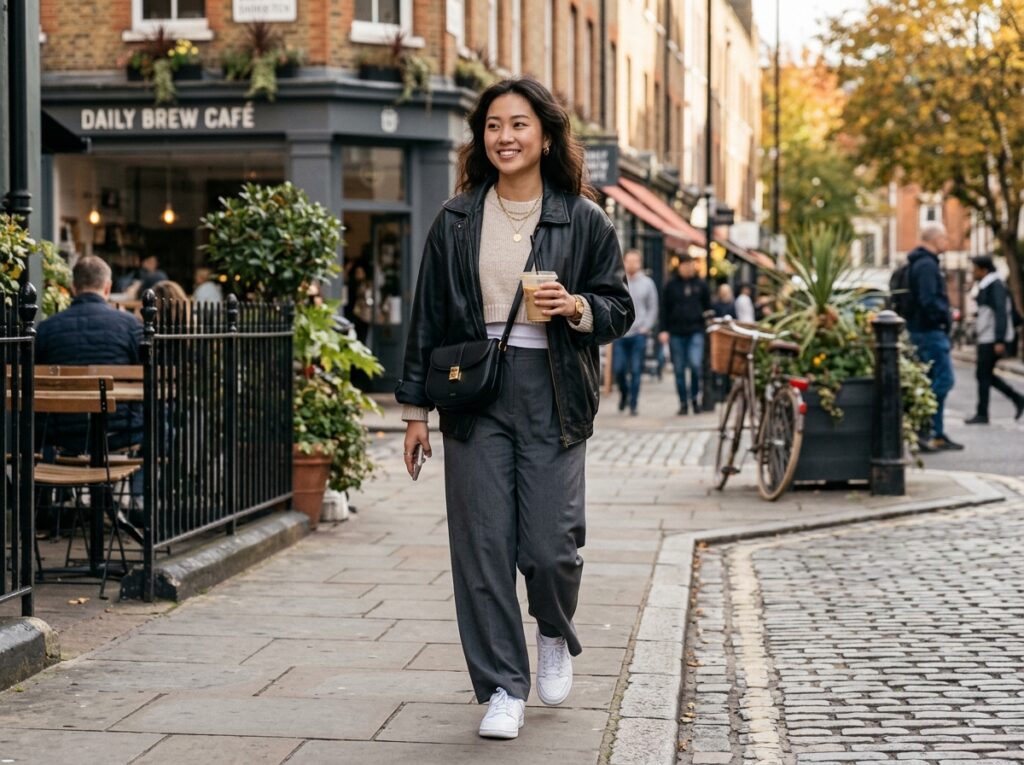
4. Layering: How I Finally Got Texture Right
For a long time I wore one flat layer at a time. A single smooth top, a single pair of jeans. It photographed fine and felt like nothing no depth, no interest. I kept it simple because I thought simple meant clean.
That was the wrong reason.
The solution was layering, not buying more.
I kept my basics as the base and started building on top: a ribbed tank under an open knit, a denim jacket over a flowy dress, a chunky cardigan thrown over a fitted tee. The result was immediate depth, warmth, and a finished look I’d been chasing by buying more single pieces for two years.
The general rule I follow now: Mix at least three textures in a single look smooth, knit, and something with body like denim or leather. Ribbed cotton, waffle knit, suede, raw denim they all read more expensive than they cost when layered together. Build from a plain base up, the same way you’d buy the big furniture before the throw pillows. Don’t start with the statement layer and work backwards.
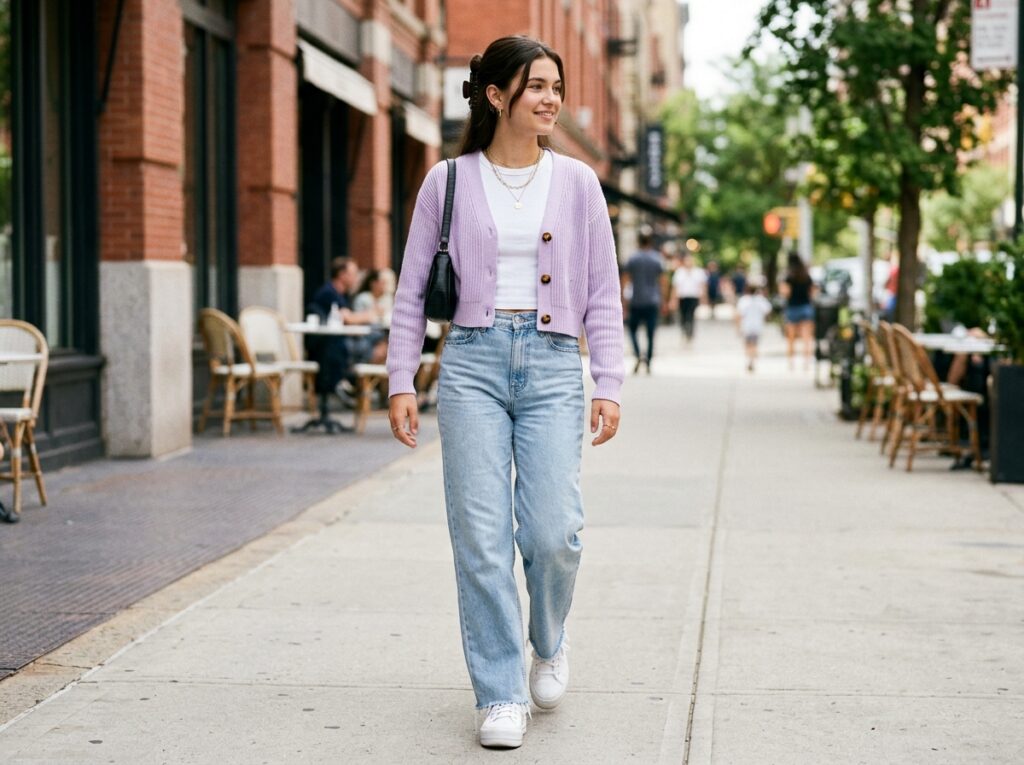
A layered autumn outfit with a ribbed tank under an open caramel knit and a denim jacket, mixing smooth, knit and denim textures for depth and warmth
5. The One Statement Piece That Made a Plain Outfit Feel Intentional
Most of my wardrobe is quiet. Neutral, simple, easy. For a long time that quietness tipped into flat every outfit was fine and nothing was memorable.
The fix was adding one loud thing.
I bought a single bold piece and built around it: a deep rust trench coat I found on sale for $58. On its own it does all the talking. Thrown over the most basic cream-and-denim outfit underneath, it makes the whole look feel deliberate.
The outfit immediately felt elevated. Not because the rest got fancier, but because one strong piece anchors everything around it and pulls the eye.
How to do this right:
- Let the statement piece be the focus build everything else plain and quiet around it
- Go bold in one place only a coat, a bag, or a shoe, never all three at once
- Keep the statement in your palette: my rust trench still lives in the warm-neutral family, so it never looks random
This is one of those changes that looks expensive and feels significant but costs less than a week of impulse buys.
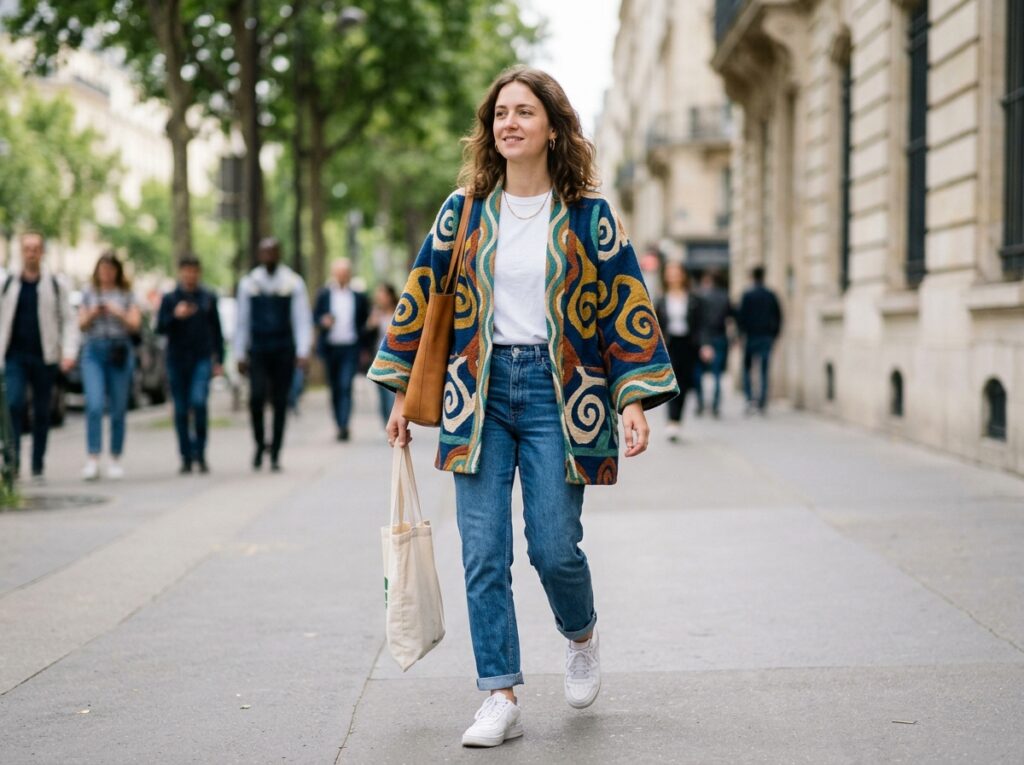
A simple cream and denim outfit elevated by a single bold rust trench coat, showing how one statement piece anchors an otherwise quiet look
6. Shoes: The Cheap Confidence Fix (and the Lesson I Learned the Hard Way)
I bought a pair of trendy platform sneakers for $42. I wore them twice. They looked great in photos and were miserable to walk in, so they sat in the box.
I replaced them with a pair of simple leather loafers for $48. I’ve now worn them through two full seasons and they go with almost everything I own. They ask for almost nothing.
What actually works in a real wardrobe:
- A clean white sneaker genuinely the most forgiving shoe I own. Goes with jeans, dresses, trousers, everything.
- A neutral loafer or ankle boot a close second. Dresses an outfit up instantly and still walks all day.
One note: a shoe you can’t actually walk in is a shoe you won’t wear. Comfort isn’t the enemy of aesthetic uncomfortable shoes are the ones that stay in the closet looking pretty and doing nothing.
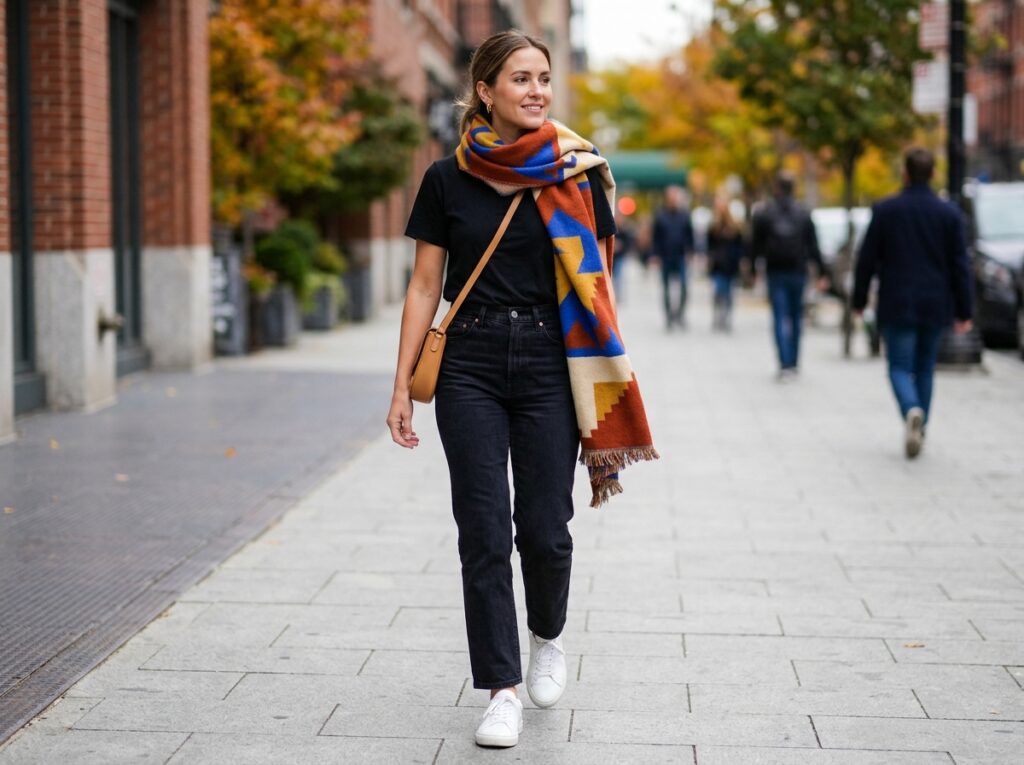
A good pair of versatile shoes ties a whole look together far more cheaply than another trendy piece ever will. I learned this after spending considerably more on shoes I wore once and never reached for again.
A pair of clean white sneakers and neutral leather loafers styled with warm-toned everyday outfits, showing how versatile shoes tie a whole look together
7. A Three-Color Formula That Made Getting Dressed Easier
The thing that finally pulled my wardrobe together wasn’t a purchase. It was a decision.
Three colors. That’s it.
- Warm white the base. Tees, shirts, knits.
- Caramel and rust the accents. Cardigans, coats, bags, a scarf.
- Soft black the anchor. Boots, belts, one structured bag.
Every new piece I’ve brought in since making that decision lives somewhere in that family. Shopping got easier. My closet stopped feeling random. Outfits that used to take me twenty minutes of second-guessing now take about three.
What’s working in outfits right now in 2026: Soft mocha and caramel tones are everywhere. Sage and olive are still strong. Warm terracotta and rust have held on far longer than anyone predicted. The big departure has been from the cool, all-gray, fast-fashion look that dominated a few years back. Warm neutrals with one grounding dark color is the formula most well-dressed people are quietly following and for good reason. It’s forgiving, it’s timeless, and almost everything mixes with everything else.
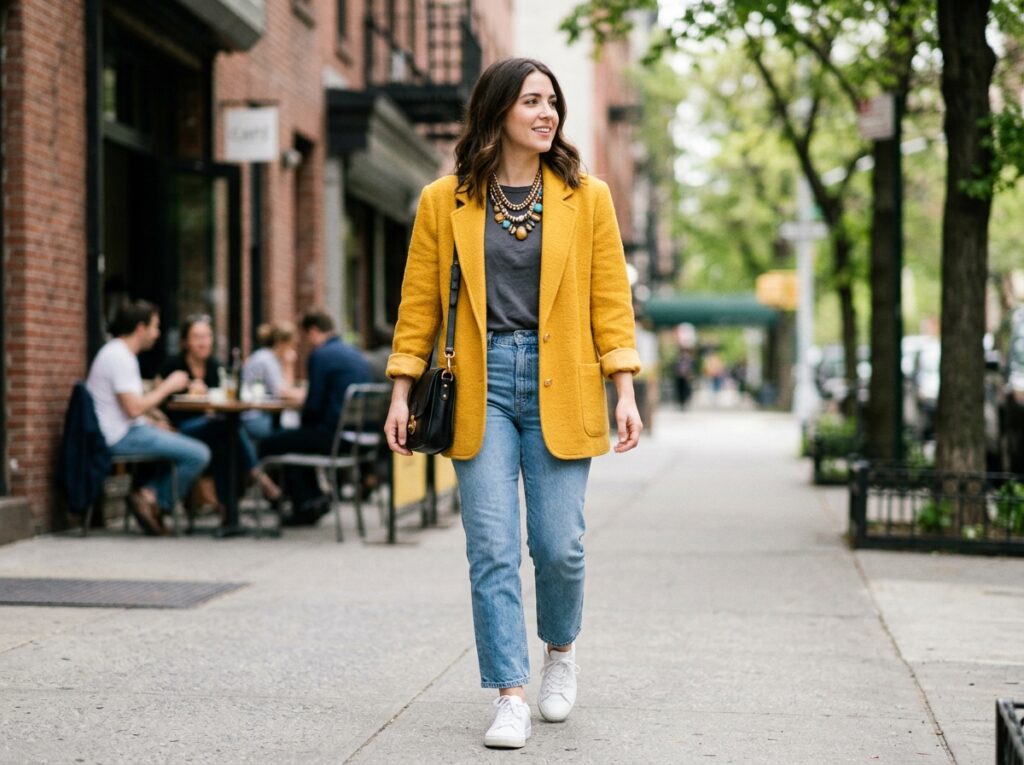
A cohesive capsule wardrobe built around three colors warm white basics, caramel and rust accents, and soft black anchor pieces laid out to show how easily they mix and match
The Four Mistakes I’d Skip If I Started Over
I bought single pieces with no plan. Forty tops, four outfits. The colors fought each other for a year before I gave most of them away. Pick a palette first, then buy down into it.
I ignored fit. Two of my early “investment” pieces never looked right because they didn’t fit my shoulders. Tailoring is non-negotiable now always, without exception.
I waited too long on the basics. A few great-fitting basics should have been the first thing I sorted, not something I got to after years of chasing trends. If you’re reading this before you’ve started: fix your fit and your basics first.
I bought for the body I wanted, not the one I have. Clothes a size too small sat unworn and made me feel worse every time I saw them. Dress the body you’re in today. The right size in the right cut always looks better than the wrong size in a “goal” piece.
A four-panel collage of real wardrobe mistakes: a closet of clashing colors, a poorly fitted blazer, trendy shoes left in their box, and clothes a size too small hung at the back of the rail
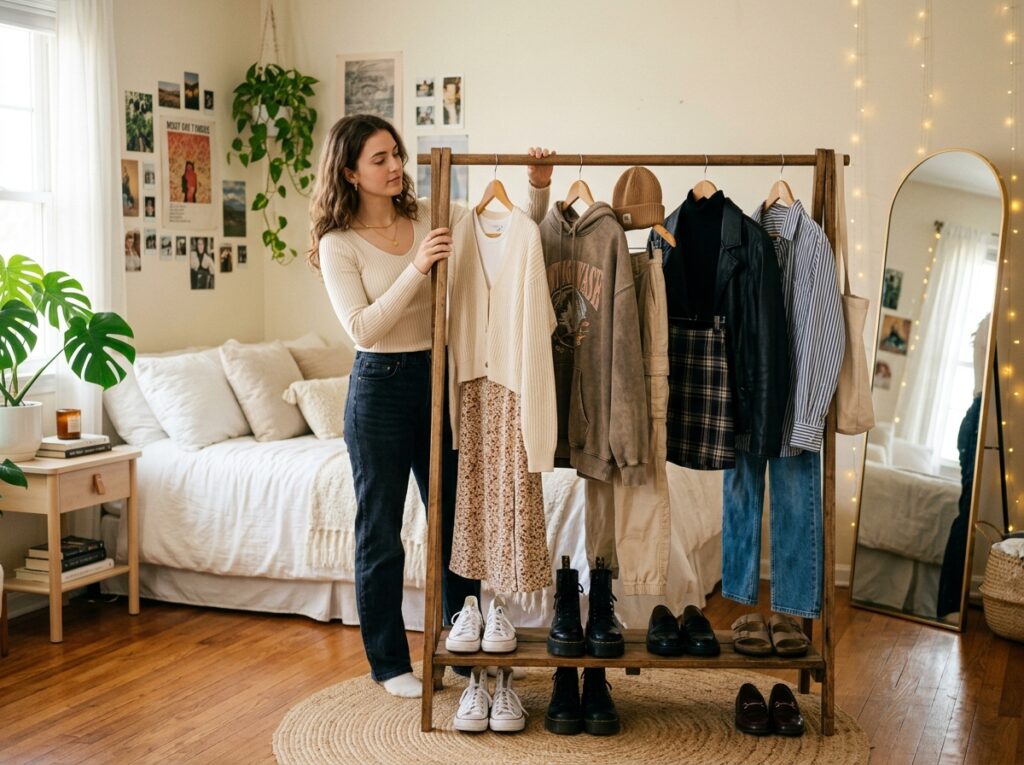
The Honest Truth About How This Took Two Years
This wardrobe didn’t come together in a weekend, and it won’t for most people either.
It took two years of small adjustments, one mistake at a time. The palette. The tailoring. The basics I ignored for too long. The bag of clashing clothes I finally donated on a Sunday afternoon when I’d had enough.
The point was never to copy someone else’s aesthetic including mine. The point is to notice what actually bothers you when you look in the mirror, and chip away at it slowly, with intention.
If you’re at the beginning of that process, save this post. Come back to whichever section is relevant when you’re standing in front of your closet at 8 a.m. wondering why nothing feels right.
And if you’ve already made one of these changes drop a comment and tell me which one moved the needle most. I genuinely want to know.
Emma writes about real wardrobes, real budgets, and real life from her apartment outside Austin, TX.

![[Insert image: engagement photo outfits]](https://outfitaesthetic.com/wp-content/uploads/2026/03/image-9-768x538.png)